
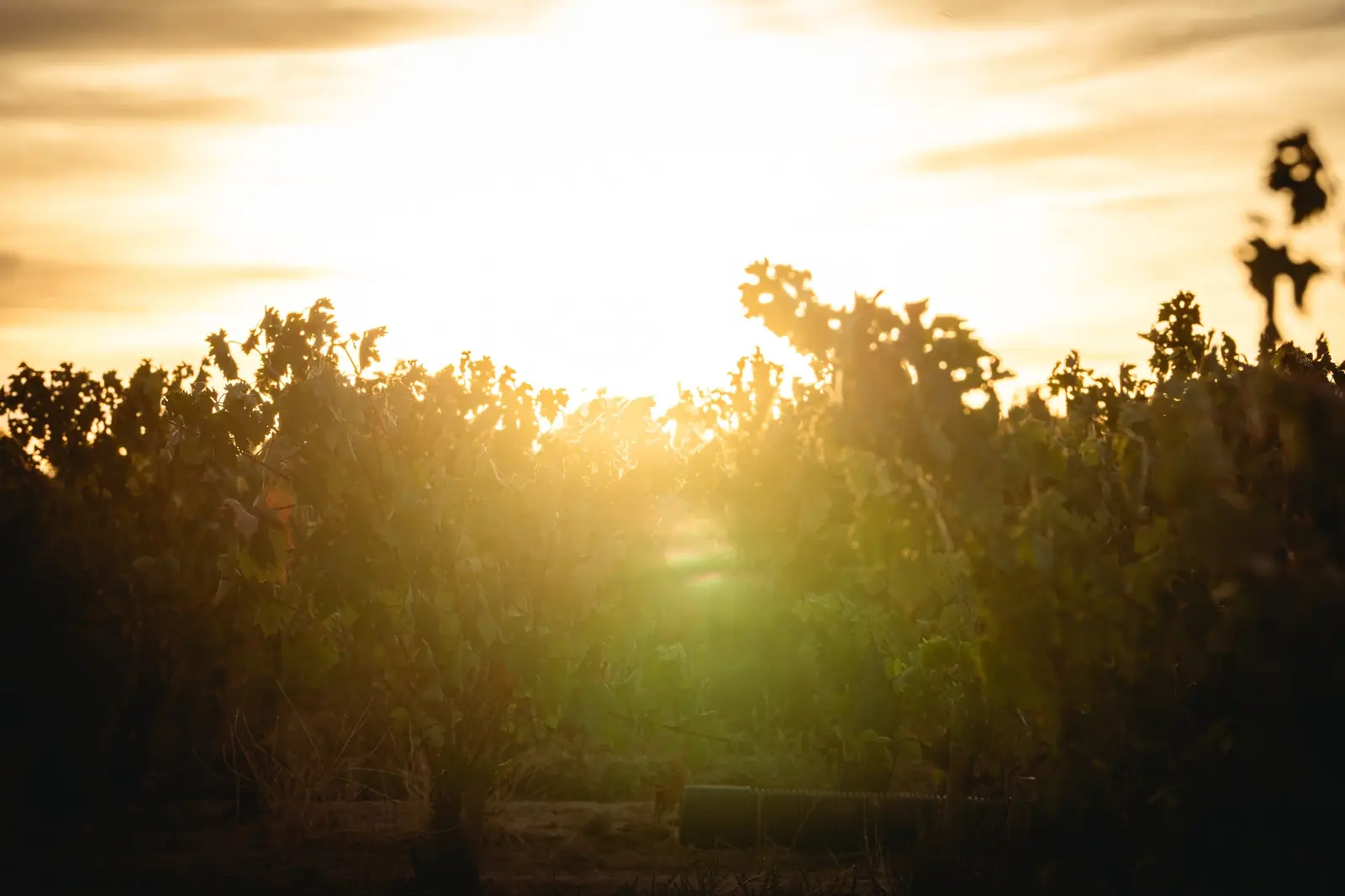
From pruning to barrel
A year in the vineyard
A bottle of TresPiedras begins more than a year before you open it: on a cold winter morning, with a pair of pruning shears. Here is what that year looks like in our vineyards in Fuentecén and Haza, month by month, until the wine rests in barrel. And for those who want to dig deeper, each stage has a “For the curious” box with the figures.
01 · December – March
Winter: the vines sleep and we prune
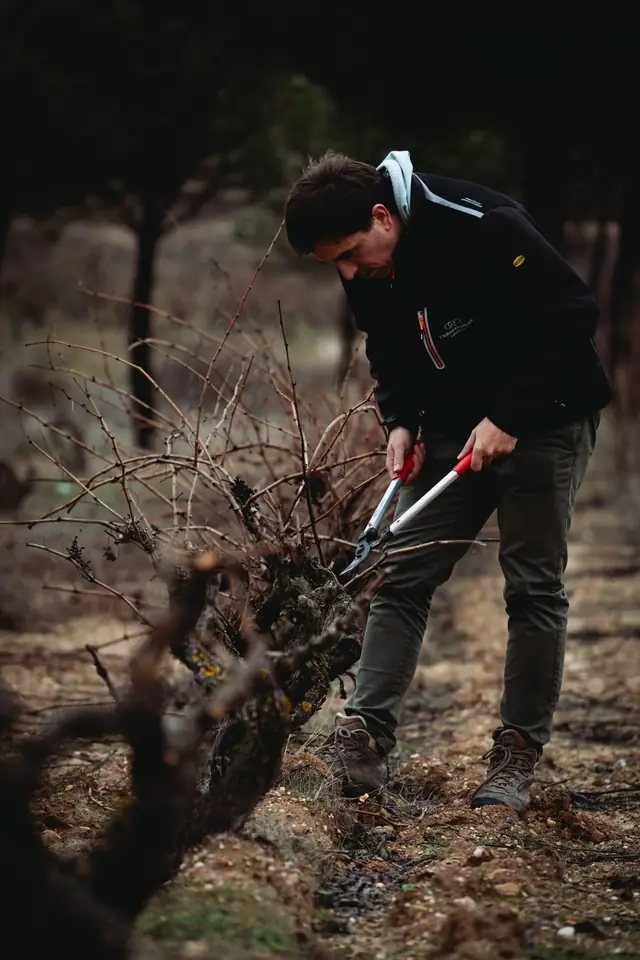
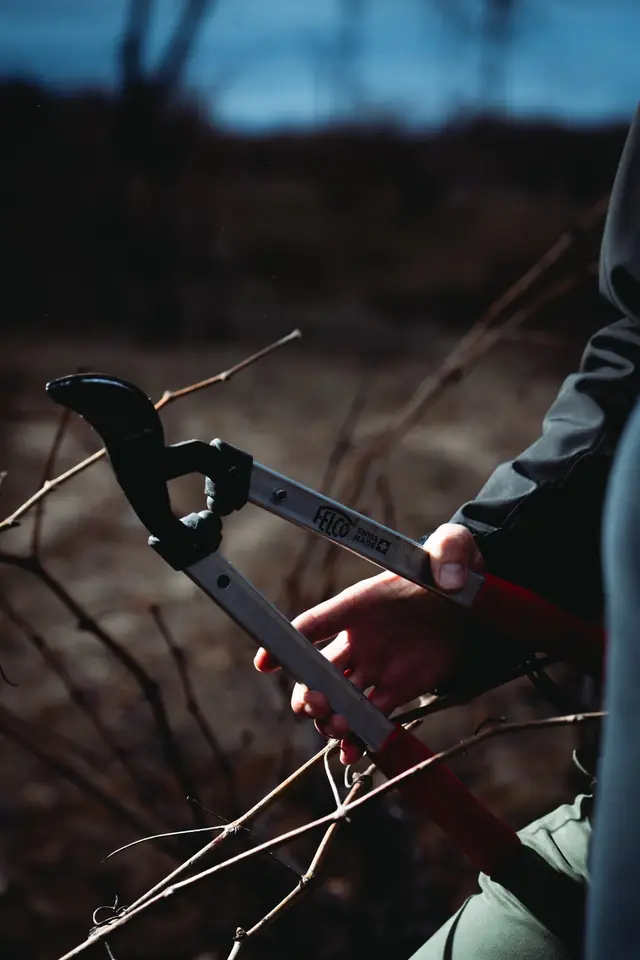
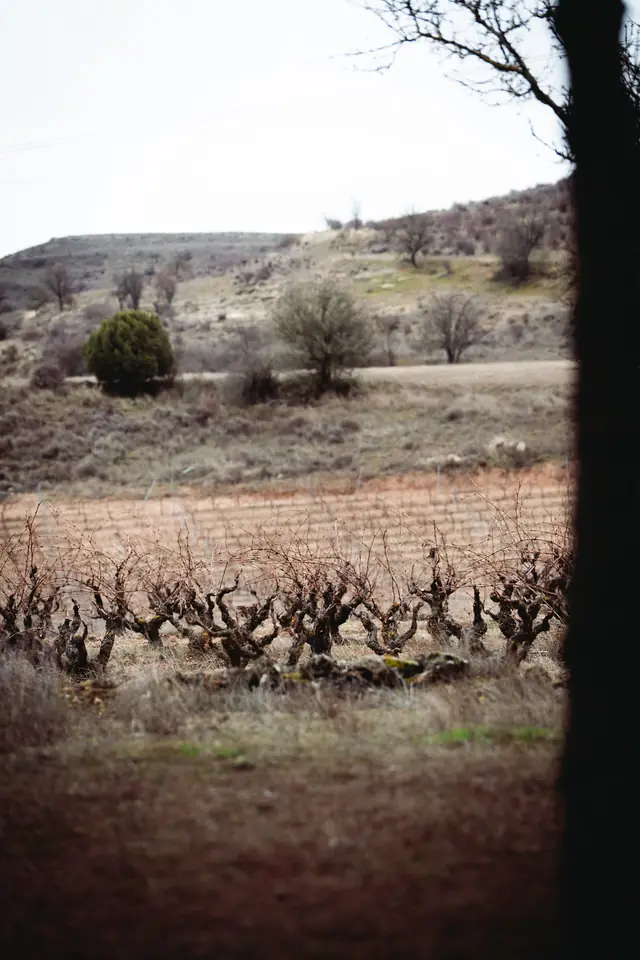
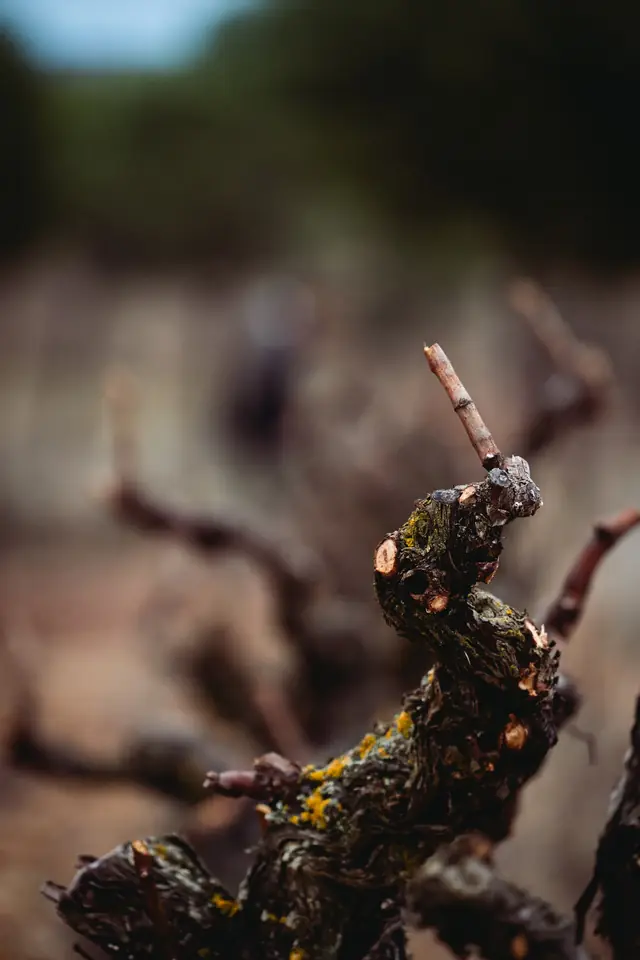
When the last leaves fall, the vine withdraws into its roots: this is dormancy. From the outside it looks dead, but it is the most important moment to decide what next year's crop will be like. We walk the vineyards vine by vine with our shears and choose which buds stay. Each will grow a shoot, and each shoot one or two bunches.
On our old bush vines pruning is short: on each arm of the vine we leave small spurs with very few buds. Few buds mean few bunches, and few bunches mean more concentrated grapes. It is a decision we make every winter: each vine has its own vigour and shape, and no two are alike.
If it snows, so much the better. Snow melts slowly and soaks the ground little by little, stores water for the summer, rids the vineyard of insects and fungi that cannot stand the cold, and helps the pruning cuts to heal. As the Spanish saying goes, “a year of snow, a year of plenty”.
02 · All year round
The soil: what you cannot see
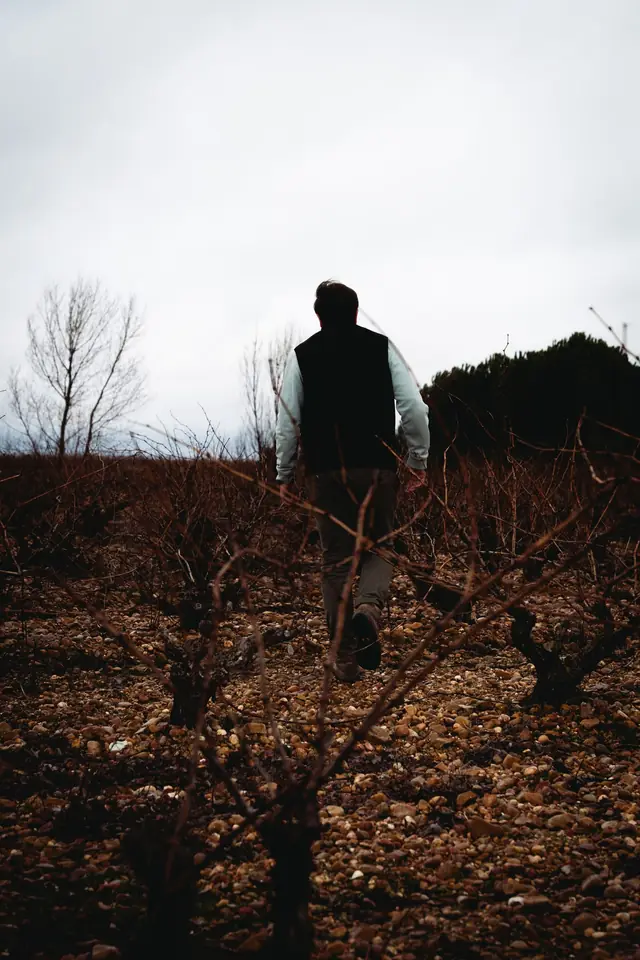
Under our vineyards there is almost always deep clay, topped by a layer of sand washed down by the storms, or plenty of rounded stones higher up. Clay works like a sponge: it holds the spring rain and gives it back to the vine in August, when it does not rain. But every plot is different. La Tejera is heavy clay, the kind used for roof tiles; La Maricana is rich in lime; in Pago de San Vicente there is red clay, white clay and sand with gravel within a few metres.
We want a living soil. We farm organically, without herbicides, and in spring we let the grass that grows on its own come up between the rows: it adds organic matter, aerates the soil and competes a little with the vine, so it does not grow too vigorous. In late spring we mow it with a brush cutter. And in winter we fertilise the old way: with manure from organic farms in the area, buried in a hole every four vines.

03 · March – April
The vines wake up
With the first mild weeks the sap rises again and the pruning cuts “weep”: they drip as if the vine were stretching after its sleep. Soon after, the buds swell and open and the first leaves appear, an almost yellow green. This is budburst, and from that day the vines are exposed: a frost before dawn can burn the shoots and take a good part of the crop.
That is why our vineyards sit high, above the river: cold air is heavy and drains down into the hollows at night. And that is why the old vines give us such peace of mind. They have lived through a hundred springs and learnt not to trust them: in mild years, when the young vines rush to bud, the old ones wait.
04 · May – June
Spring: tidying the canopy
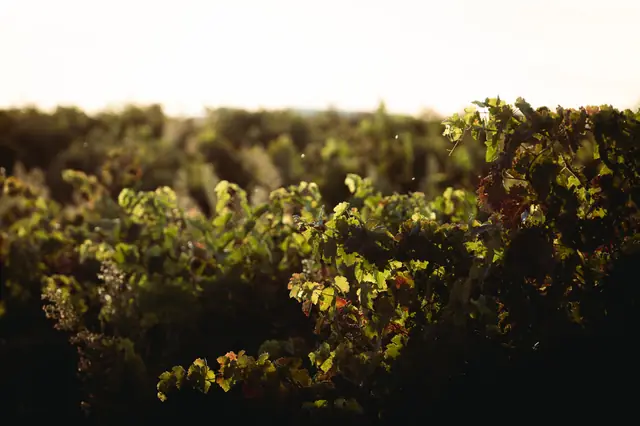
In spring the vines grow at astonishing speed and we have to keep pace. Winter pruning was a statement of intent, but the vine also buds where we did not want it to. In May we do the “green pruning”: by hand we remove the shoots on the trunk and those that will not give good grapes, so light and air can get in.
Towards the end of May or in June the vines flower. Do not expect colourful petals: the flowers are tiny and green, almost invisible, and smell of honey. Every flower that sets will become a grape. Then we trim by hand, with thin canes, cutting the tips of the longest shoots, and remove the laterals, side shoots that grow from the main ones and only waste energy. A well-aired bunch defends itself better against fungi and the grape moth.
It is also storm season. With a network of weather stations in the vineyards we track humidity and temperature to stay ahead of downy and powdery mildew without synthetic products. And we watch the sky: hail can wipe out a year's work in minutes.
05 · The grapes
Tempranillo, Albillo Mayor and what our grandparents planted
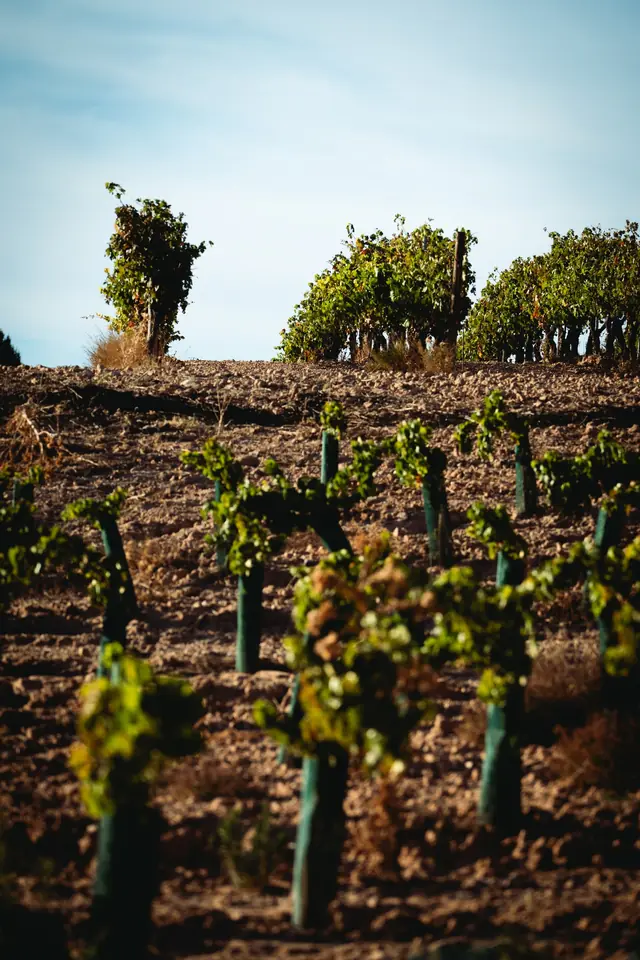
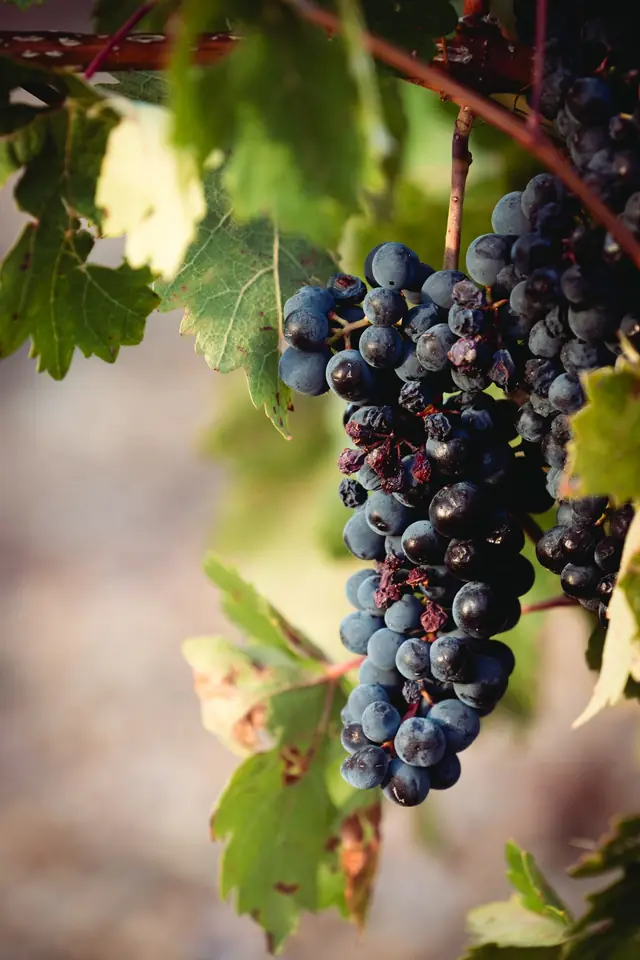
Almost everything we grow is Tempranillo, known here as Tinto Fino: compact bunches of small, dark-skinned grapes, with red and black fruit and good acidity. When we plant new vines we do not buy them from a nursery: we take cuttings from our oldest vineyards, above all La Tejera, to keep the same grape our grandparents chose.
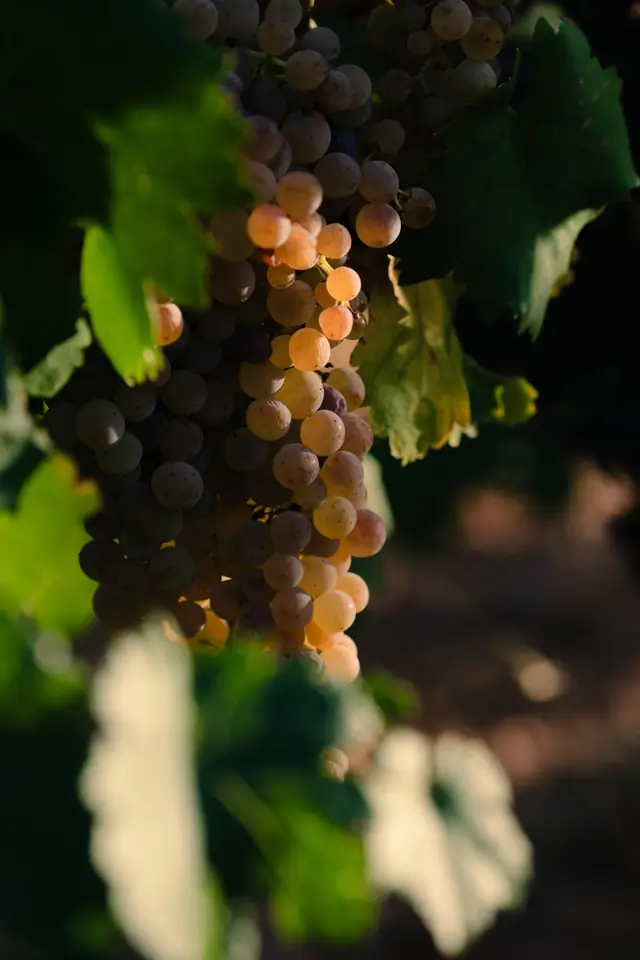
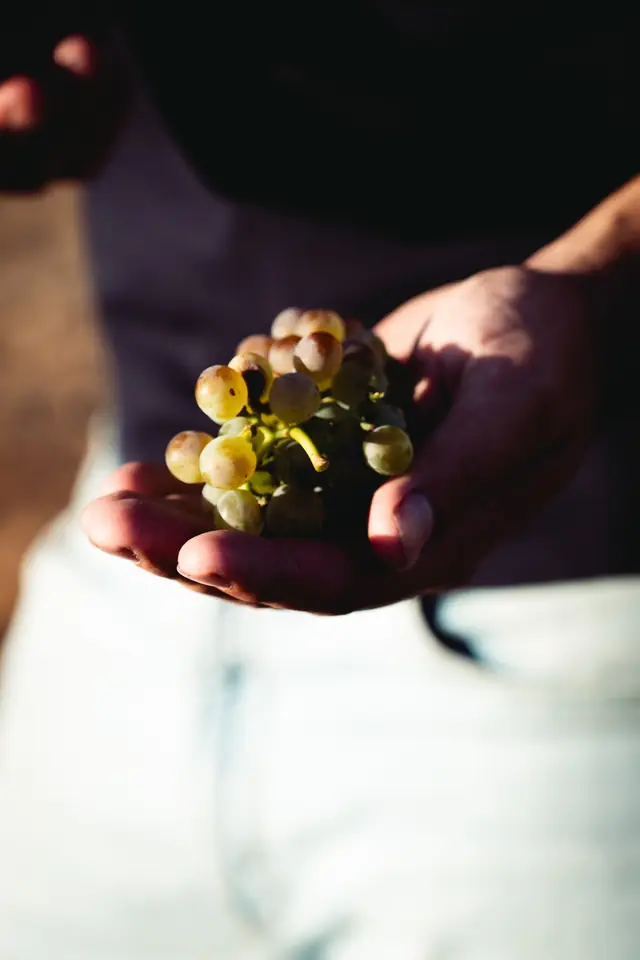
Old vineyards hold surprises. Vines used to be planted mixed, and in La Tejera, among the Tempranillo, there are Garnacha vines, Albillo Mayor and others nobody has managed to identify. Albillo Mayor is our white grape: small, tight bunches, low yields and great resistance to drought. For decades it was grubbed up, and today only scattered vines remain among the reds. We make Santa Cruz from it, seeking it out vine by vine.
06 · July – August
Summer: veraison and the heat
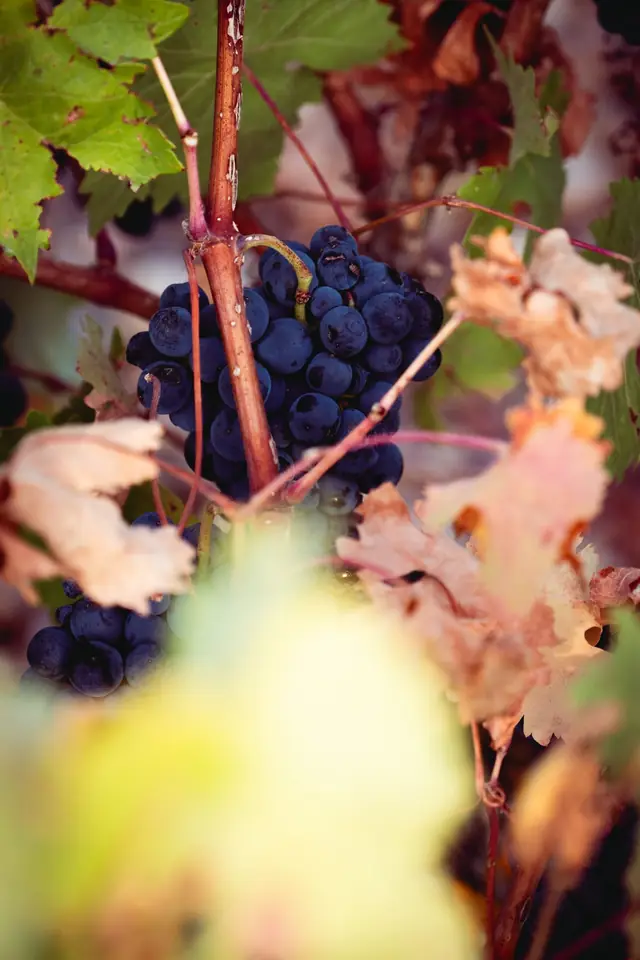
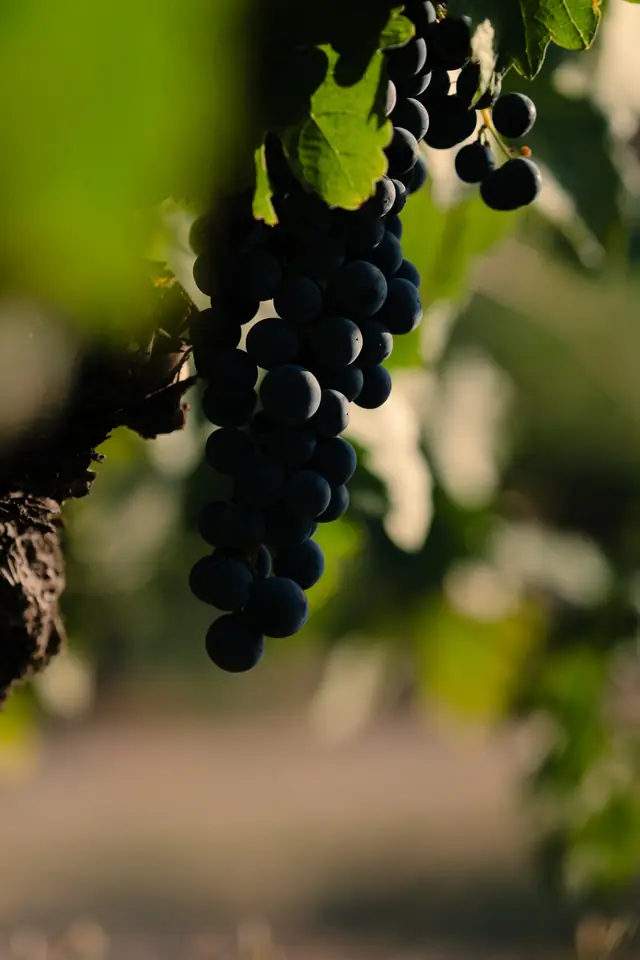
Half of Spain is on holiday, but not the vineyard. Between July and August comes veraison: the grapes, green and hard until then, soften and the red ones turn purple, berry by berry, as if the vineyard were getting dressed. From that moment the grapes stop growing and start ripening: they build up sugar, lose acidity and fill their skins with colour and aroma.
In July we thin the crop: on the most vigorous vines we drop some bunches so the rest ripen better. They stay on the ground as fertiliser, because what comes from the earth goes back to it. Then we have to see out the heat. We do not irrigate: the old vines, with very deep roots in the clay, are the ones that best withstand dry summers.

07 · Late August – September
When is the grape ripe?
It is the question that keeps us awake every September. Grapes do not ripen all at once: on one side sugar rises, which will become alcohol, and acidity falls, which gives freshness; on the other the skins ripen, where colour and aroma lie, and so do the seeds, which bring tannins. Ideally everything reaches its point at the same time, and that does not always happen.
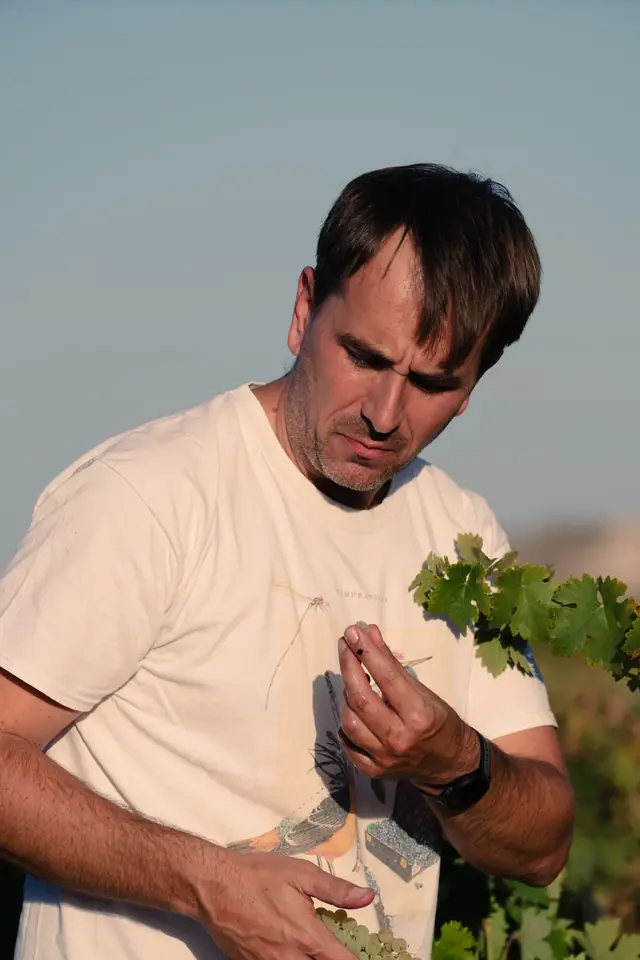
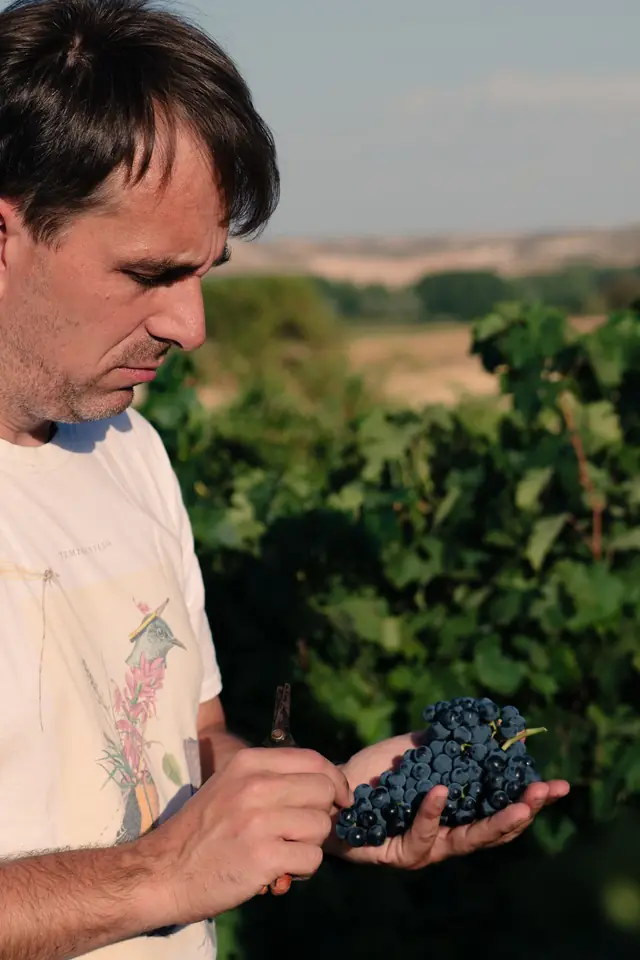
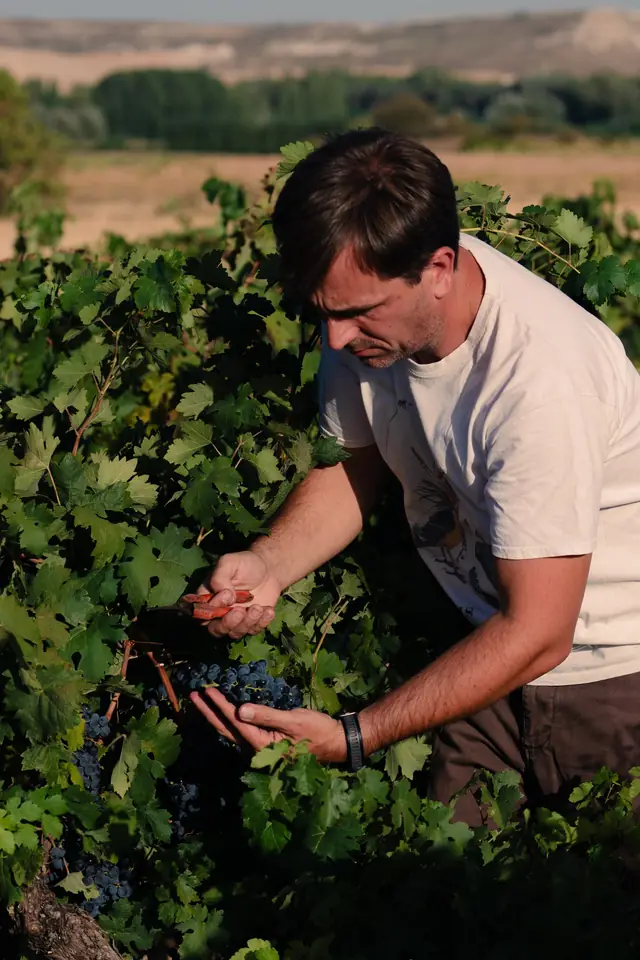
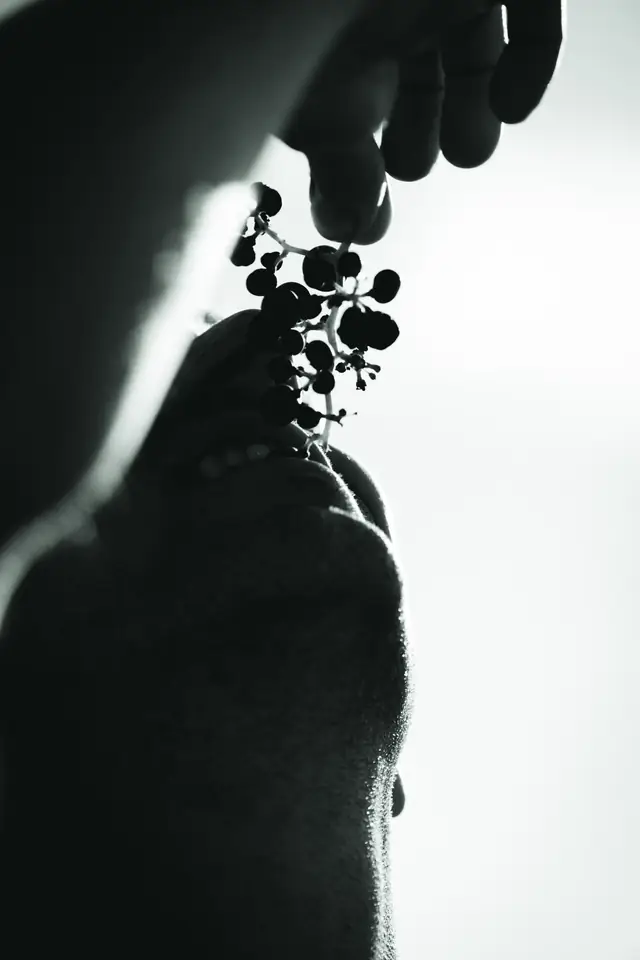
So we do two things. We send samples from each plot to the laboratory to know how much sugar, acidity and colour the grapes have. And, above all, we walk the vineyards eating grapes. A ripe grape comes away easily from the bunch, its pulp slips off the seed, the skin melts in the mouth without bitterness and the seeds turn from green to brown and crunch like a nut. When the laboratory and our mouths agree, we pick.
The grapes behind our wines, before harvest
| Plot | Sample | Baumé | pH | Total acidity (g/l) | Malic acid (g/l) | TPI |
|---|---|---|---|---|---|---|
| Unanimous Finca la Tejera | ||||||
| La Tejera | 24/8/2026 | 12.70 | 3.54 | 4.3 | 1.64 | 26 |
| Unanimous Santa Cruz (Albillo Mayor) | ||||||
| Albillo, sample 1 | 5/9/2022 | 12.9 | 3.37 | 6.5 | — | — |
| Albillo, sample 2 | 5/9/2022 | 13.8 | 3.57 | 4.0 | — | — |
| Albillo, sample 3 | 5/9/2022 | 12.7 | 3.55 | 5.2 | — | — |
| Other plots of ours | ||||||
| Atolín | 24/8/2026 | 15.59 | 3.48 | 5.3 | 2.25 | 19 |
| Pino | 24/8/2026 | 14.22 | 3.69 | 4.4 | 1.70 | 29 |
| Palomar | 24/8/2026 | 13.02 | 3.56 | 4.6 | 1.80 | 24 |
| Sotillo | 24/8/2026 | 11.60 | 3.62 | 5.0 | 2.65 | 20 |
Analysis by REDLAB Spain. A month before harvest, La Tejera had good colour (TPI 26) and little malic acid, but its sugar still had room to rise: time to wait and test again. The Albillo for Santa Cruz is analysed by micro-plot, because each group of scattered vines ripens at its own pace: on the same day they ranged from 12.7 to 13.8 °Bé and from 4.0 to 6.5 g/l of acidity; that year it was picked on 24 September. The other plots show the sugar trap: the one with the most (Atolín) had the fewest polyphenols, and only tasting the grapes can settle that.
08 · September – October
The harvest
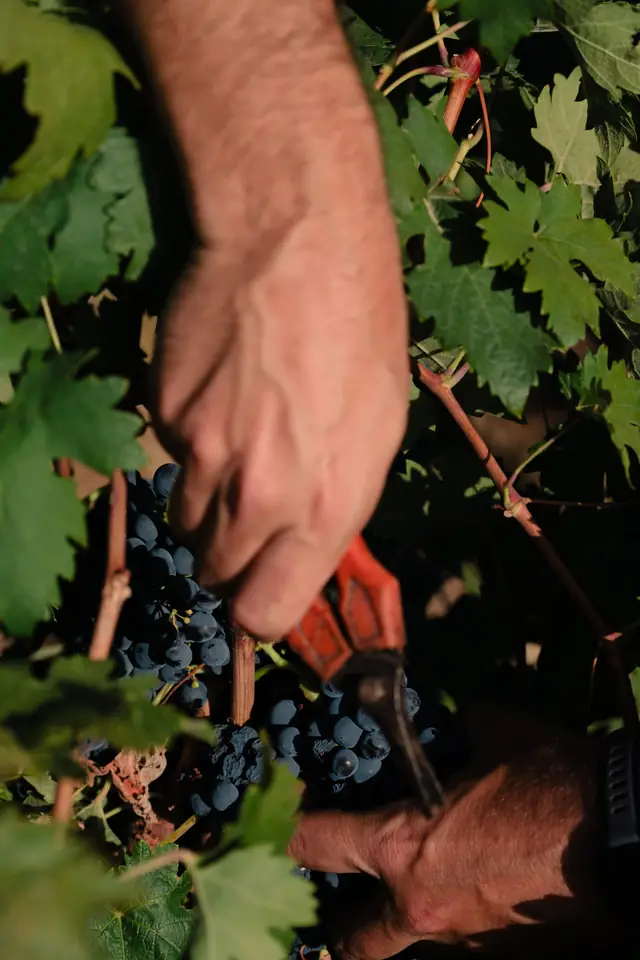
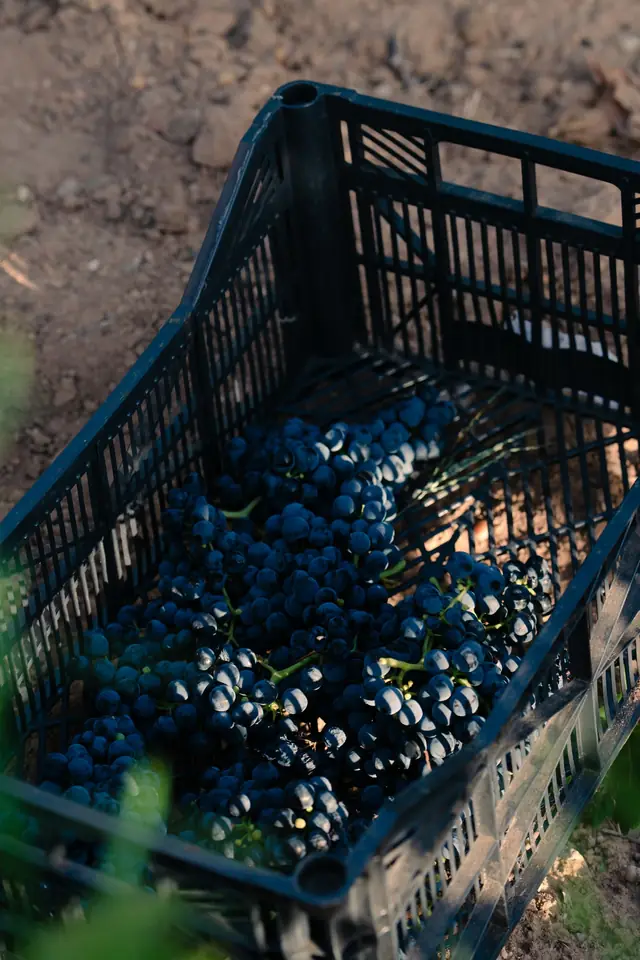
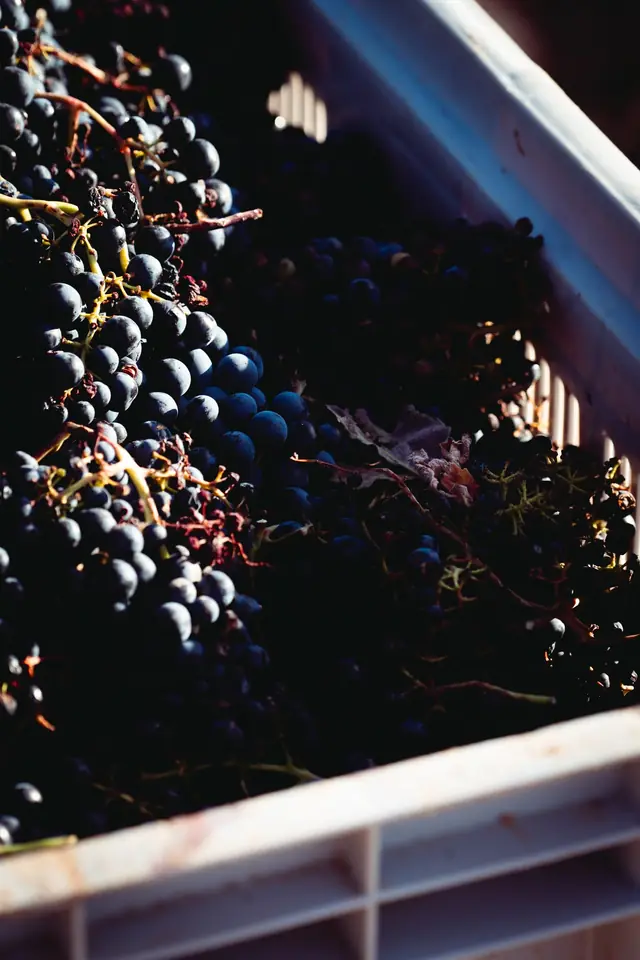
These are the most intense days of the year. We pick everything by hand, in 15-kilo crates so the grapes are not crushed, and we start with the first rays of sun, because the colder the grapes reach the winery, the better. We do not pick everything at once: each plot comes in when it is ready. First the white grapes and the vineyards on poorer soils, which ripen earlier, and the lowest plots near the river, before the October frosts arrive.
Old vines give very little. In La Tejera we get roughly one bottle per vine. That is why we check the crates one by one, and the grapes only leave the vine when we are sure. The vineyard has worked all year for this moment.
09 · October – November
From grape to barrel
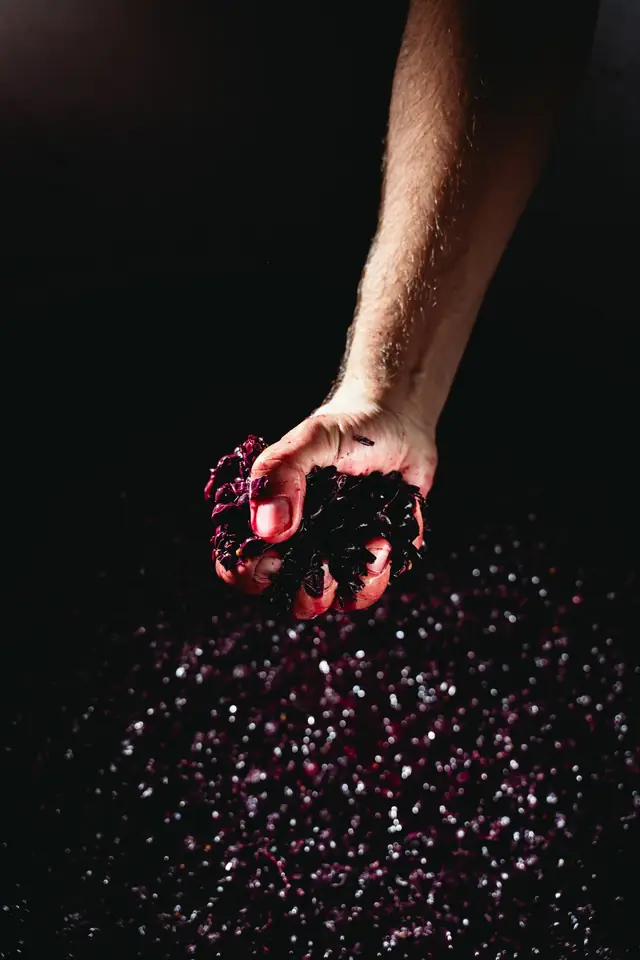
The grapes reach the winery cold and we chill them further. We destem them and press them very lightly, hardly at all. The reds ferment at low temperature in stainless steel tanks; for La Tejera and La Maricana we use dry ice to keep them cold. Every day we gently push down the cap of skins floating on the must (the punch-downs), to draw colour and aroma from the skins without extracting harsh tannins.
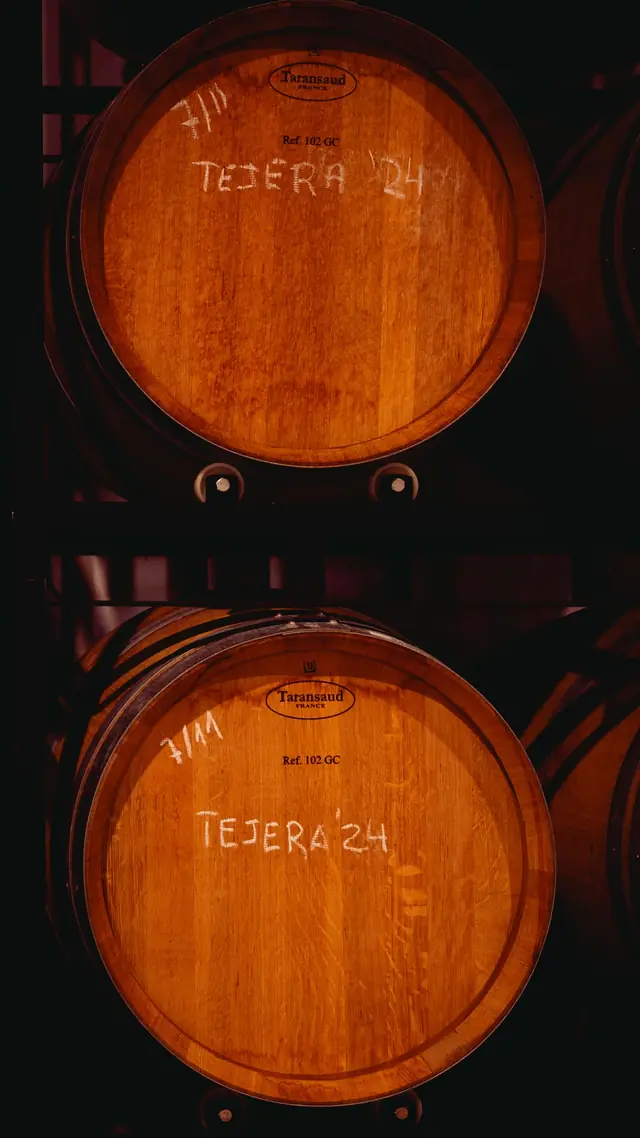
Fermentation starts on its own, with the yeasts that come in on the grapes from the vineyard. Then the wine goes into barrels of very fine-grained French oak, where it goes through the second fermentation, the malolactic, which softens it. Santa Cruz, the white, ferments largely in barrel and rests on its lees. The barrels are marked in chalk with the plot and the vintage, and the ageing begins.
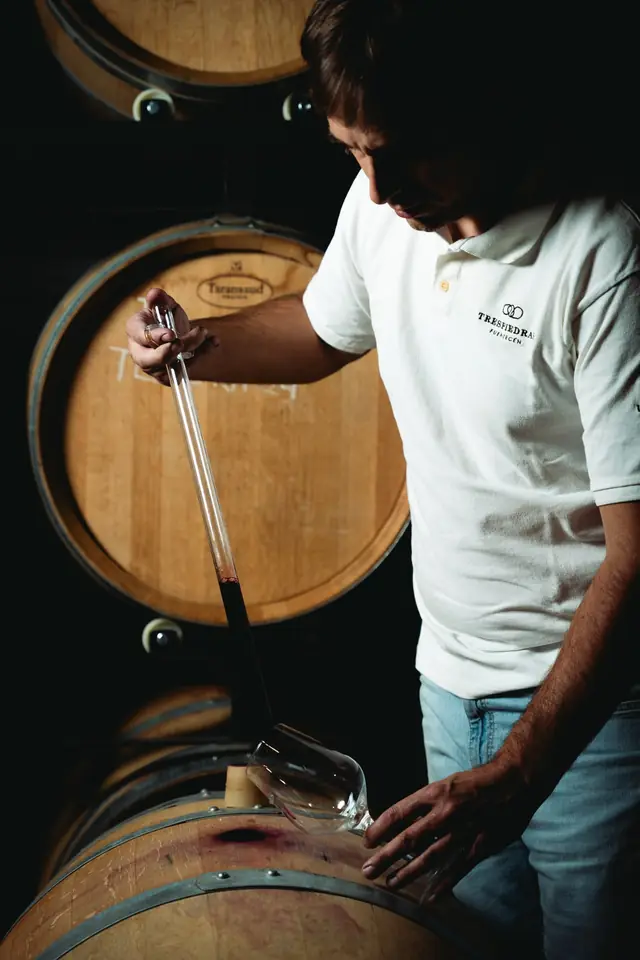
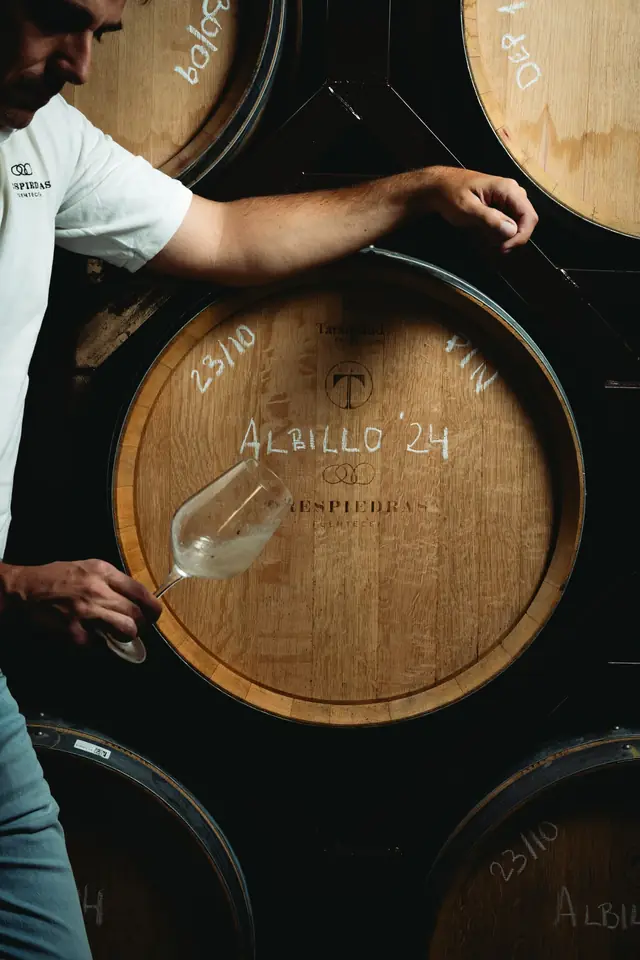
And here, in the barrel, the wine begins another story: months of ageing, the bottle and, at last, your table. But everything you will find in the glass was decided during this year in the vineyard.
See the wines