
Vineyard ·
The vineyard in summer: what happens until the harvest?
The countryside, the vineyard, does not stop even in summer. As every year, in summer (almost) everything seems to come to a halt. In the vineyard, we think, all that is left is to wait for the harvest to gather the fruit of a new vintage. But the land does not sit idle under the summer sun and in the heat.
Between July and August the grapes begin their sugar and phenolic ripening. This is véraison, when colour dresses the vineyard. The berries lose their green and turn purple (in red varieties). The grapes begin to build up aromas, sugars, acids and phenolic compounds, which give wine its colour. In our region, the Ribera del Duero of Burgos, véraison in July is rare, yet this year we have already seen it in several plots, which tells us the harvest will come very early. The high temperatures and lack of rain play their part.
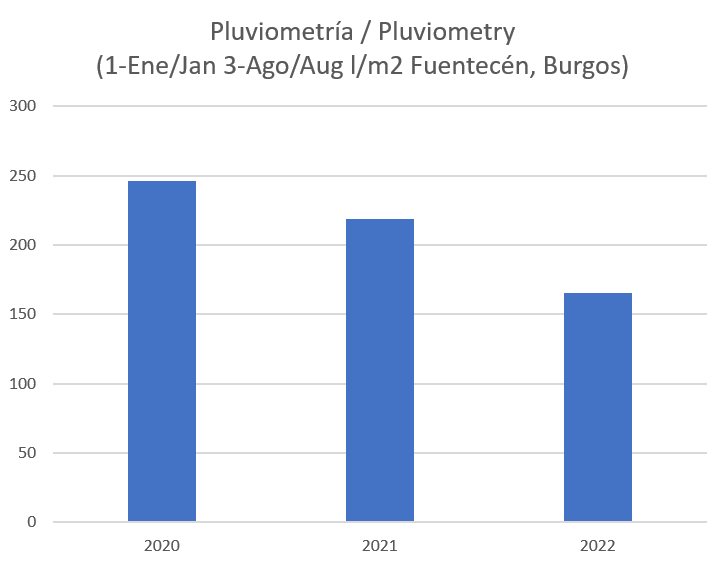
So far in 2022 only 165 litres of rain per square metre have fallen on our vineyards, compared with 246 litres in 2020 and 219 in 2021. This points to a very difficult vintage, with an early harvest and optimal ripeness only in very old vineyards with deep roots, planted in carefully chosen spots on deep clay soils.
Véraison plays a key role, as it opens the way to the harvest. But what happens in the vineyard during the summer months?
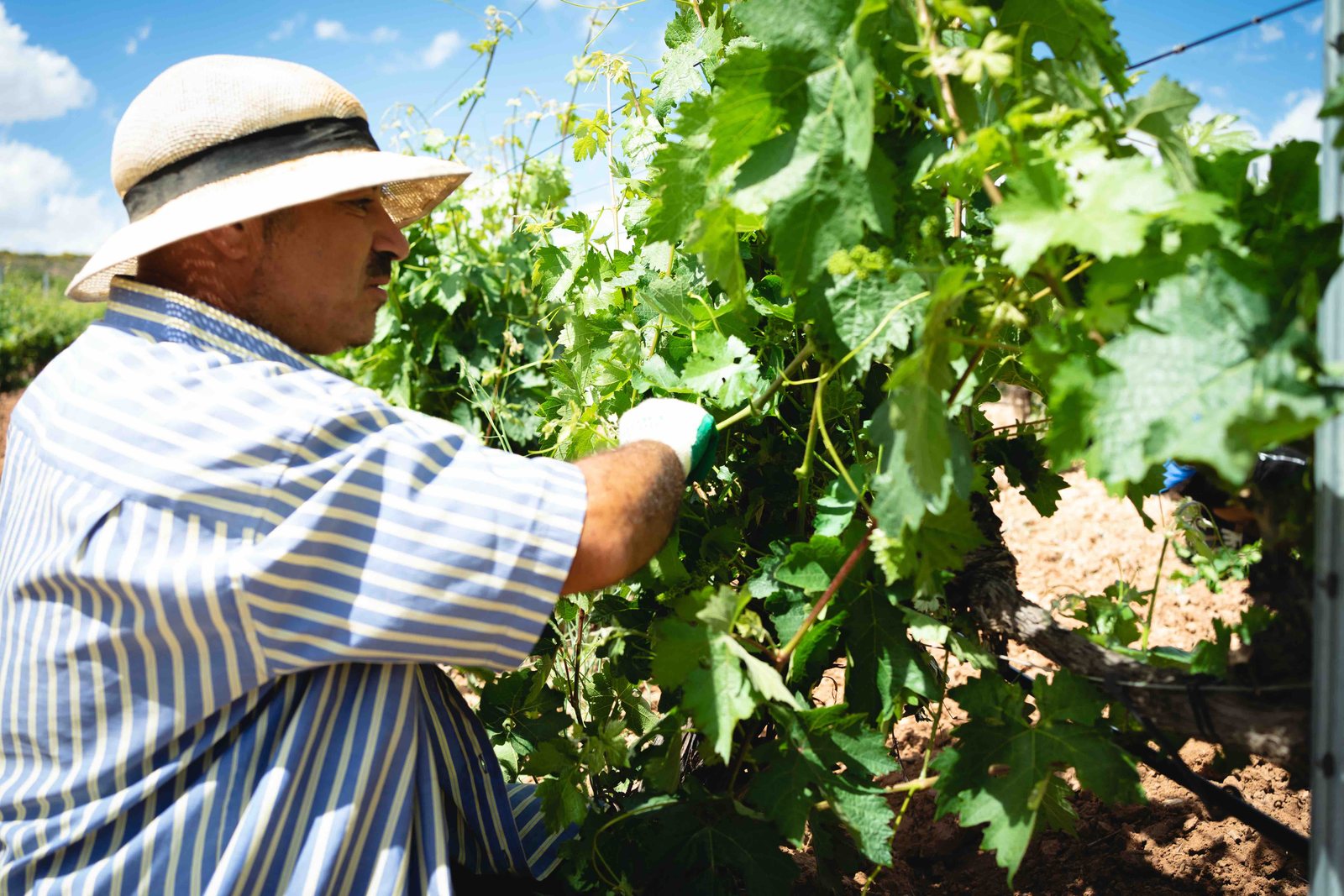
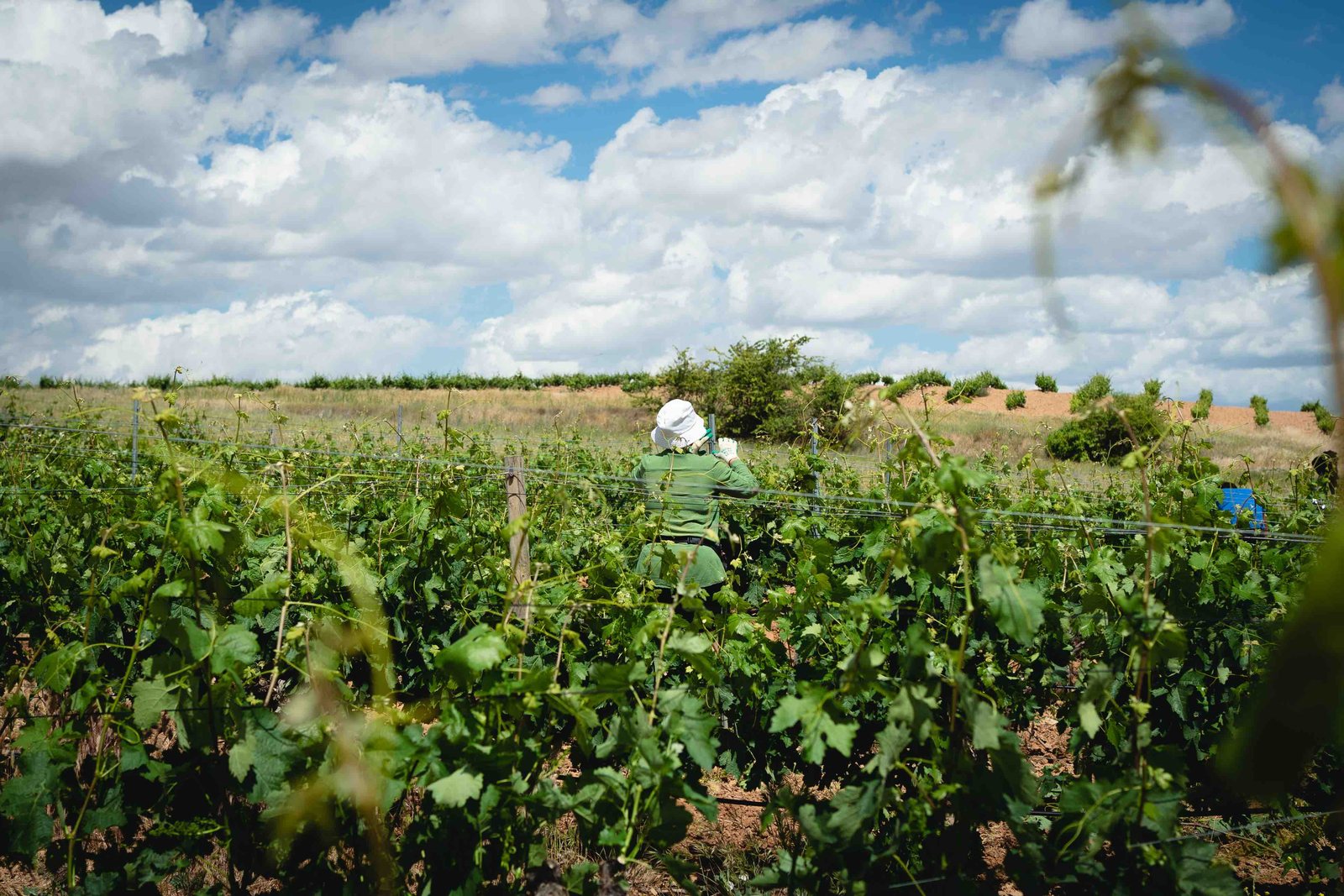
In July and August we keep working in the vineyard. We have to control the canopy. If vigour has not been managed properly and the fruit is shaded, we top the shoots, which gives the bunches more volume and brings the plant into balance.
Another important task for us in July is bunch thinning. We remove the excess crop from some of the more vigorous vines. The bunches are left on the ground as green manure. What comes from the earth stays in the earth.
Irrigation?
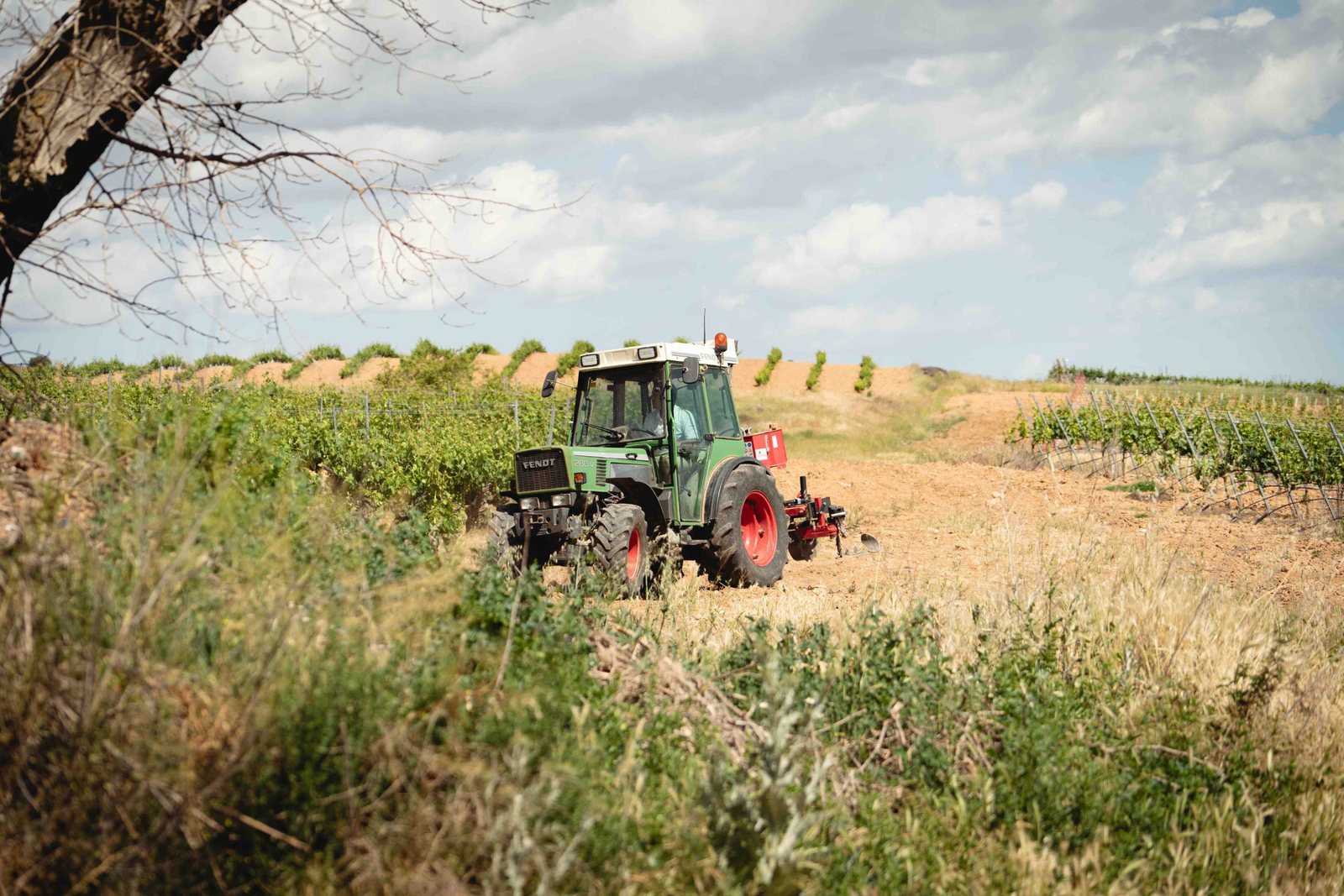
Heatwaves, drought… As this year’s rainfall figures show compared with previous years, controlling soil moisture is now essential. Vines use a lot of water at this time of year, so in plots with a water deficit we monitor soil moisture very closely. Where the vines still need help, as with new plantings, we water generously.
For establishing young vineyards these are the ideal months, and we carefully prepare the ground to receive the new plants.
Sampling
In August we take several samples in the vineyard. These checks tell us when the grapes are at their best and therefore when to pick. We measure the sugar and acidity of the pulp: degrees Brix, total acidity and pH. Reaching the ideal values all at once is very difficult, but with thorough monitoring we can pinpoint the right moment to harvest very precisely.
Source: TresPiedras blog, published on 31 July 2022.